The Window Seat
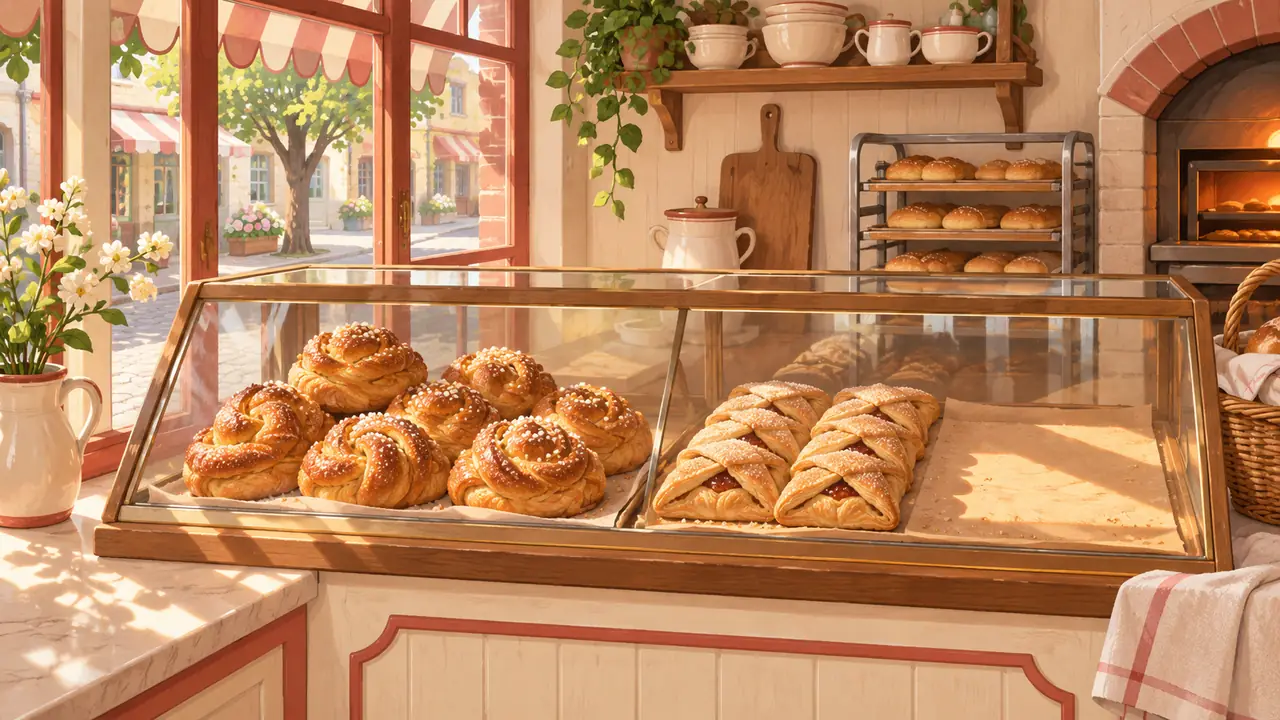
The Window Seat takes place after the bakery has put its first pastries behind the glass. The door opens toward the bakery counter. Near the front glazing a short bench looks toward the wet pavement. A regular sometimes sits while waiting for their order. The baker can use this corner for trays or keep it available for a conversation that might pick up from a previous morning.
Make one place to pause before taking another order
The loop starts when the baker notices who has arrived and checks which order is ready. A small stool can be moved closer to the window. Placing it beside the door makes a short visit possible and can interfere with the path to the case. Putting it just beyond the low shelf leaves a larger turn near the glass. The choice matters when another order needs to be carried past the person who has stopped.
The first prototype treated a conversation as a pause in every other task. During the pause the pastries would wait for the baker. We changed the schedule so a reader can decide to finish one order first, look at the timer and return when the visitor has a clear place to sit. Giving people a reason to wait in a particular place keeps the story bound to the shop without requiring a long dialogue in the middle of the work area.
Read a visit from the objects that stayed
The corner uses warm cream walls and brown wood with a soft terracotta stripe along the sill. A basket sits between the seat and a path toward the counter. The view through the window includes a visible curb where the visitor usually approaches. The chair can be moved in either direction, and the unchanged window and floorboards provide a way to see where the work area has changed.
We keep dialogue short and tied to observations a person could make in the room. Somebody can notice that a later batch is cooling. They can also return after a visit ended early and offer another part of the story. A quiet passage from the window to the door helps the player understand why the same two tasks can go differently on another morning.
Decide when to extend the visit
The baker can finish a parcel now, leave a tray to cool and give a regular a little longer to sit. On another morning there may be no clear place to move the hot tray. A shorter conversation can still be useful if the visitor has someplace to pause and you can see when they might return. The prototype shows how remaining tasks fit into the space around the order, so a player can make the decision without memorizing a separate clock.
The Window Seat is in prototype development. A Stool by the Window records the first waiting area, and Before the Next Order covers a visit beside the task timings. Find the scene on the window shelf.
The clock can move while the visitor keeps a familiar place.